
How to Pass Your Driving Test First Time in Birmingham — Honest Advice From Local Instructors
Let's be straight with you. Learning to drive in Birmingham is not easy. The roads are busy, the roundabouts are relentless, and the traffic doesn't care that you're still learning. But here's what we tell every single one of our students on their first lesson — thousands of people pass their driving test first time in Birmingham every year. With the right preparation and the right instructor, you can absolutely be one of them.
This is our honest, no-nonsense guide to making that happen.
So Where Will You Actually Sit Your Test?
This catches a lot of people out. Birmingham is a big city and depending on where you live, your nearest test centre will be different. The main ones are:
- Kingstanding — if you're in Perry Barr, Great Barr, Erdington, or anywhere in north Birmingham, this is likely yours
- South Yardley — covering Solihull, Sheldon, Acocks Green, and the south of the city
- Garretts Green — the go-to for learners in the north and northeast
Each centre has its own routes and its own quirks. Kingstanding runs around 41–45% pass rate, South Yardley is similar, and Sutton Coldfield tends to be a touch more forgiving. But honestly? Don't chase a higher pass rate at a centre you've never driven near. The best test centre is always the one you know — the one your lessons have been preparing you for all along.
How Many Lessons Do You Actually Need?
We get asked this every day, and we always give the same answer — it depends on you, and anyone who tells you otherwise is guessing.
The national average is around 45 hours of professional lessons. Some of our Birmingham students are ready in 30. Some need 55. Neither is something to be embarrassed about. Everyone learns differently, and that's completely fine.
What matters a lot more than the number is what you do with those hours. Forty lessons on quiet residential streets will not prepare you for the A34 at rush hour. Thirty lessons in real Birmingham traffic — roundabouts, dual carriageways, busy junctions, school zones — will. Make sure your lessons are taking you out of your comfort zone, not keeping you in it.
And if you're ever unsure where you stand, just ask your instructor directly. You deserve an honest answer, not a vague "you're getting there."
The Bits of Birmingham That Catch Learners Out
Every part of the city has its own challenges. Here are the ones we see trip people up most often.
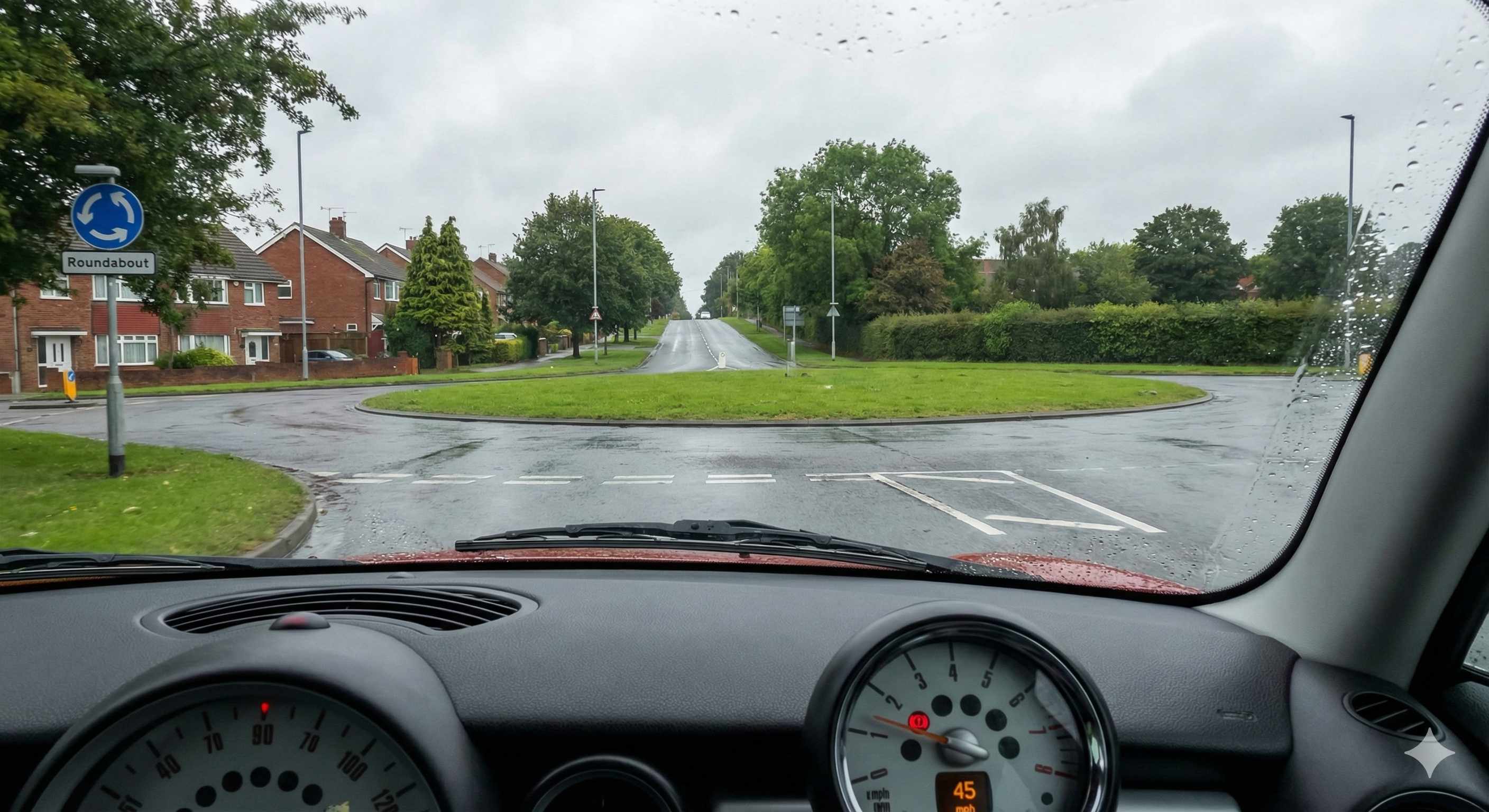
The roundabouts There are a lot of them — and many are multi-lane, fast-moving, and completely unforgiving if you drift into the wrong lane. The Kingstanding Circle, Perry Barr island, and the roundabouts along the A452 are the ones that feature most on tests. The key is practising each one from every single approach, not just the direction you usually come from.
Dual carriageways The A34, A38, and A452 all require genuine confidence — smooth lane changes, proper speed management, and reading the road well ahead. The 50-40-30 speed camera sequence on Chester Road is a classic one. Learners see the sign late, panic, brake hard. Practise spotting those signs early and you'll sail through.
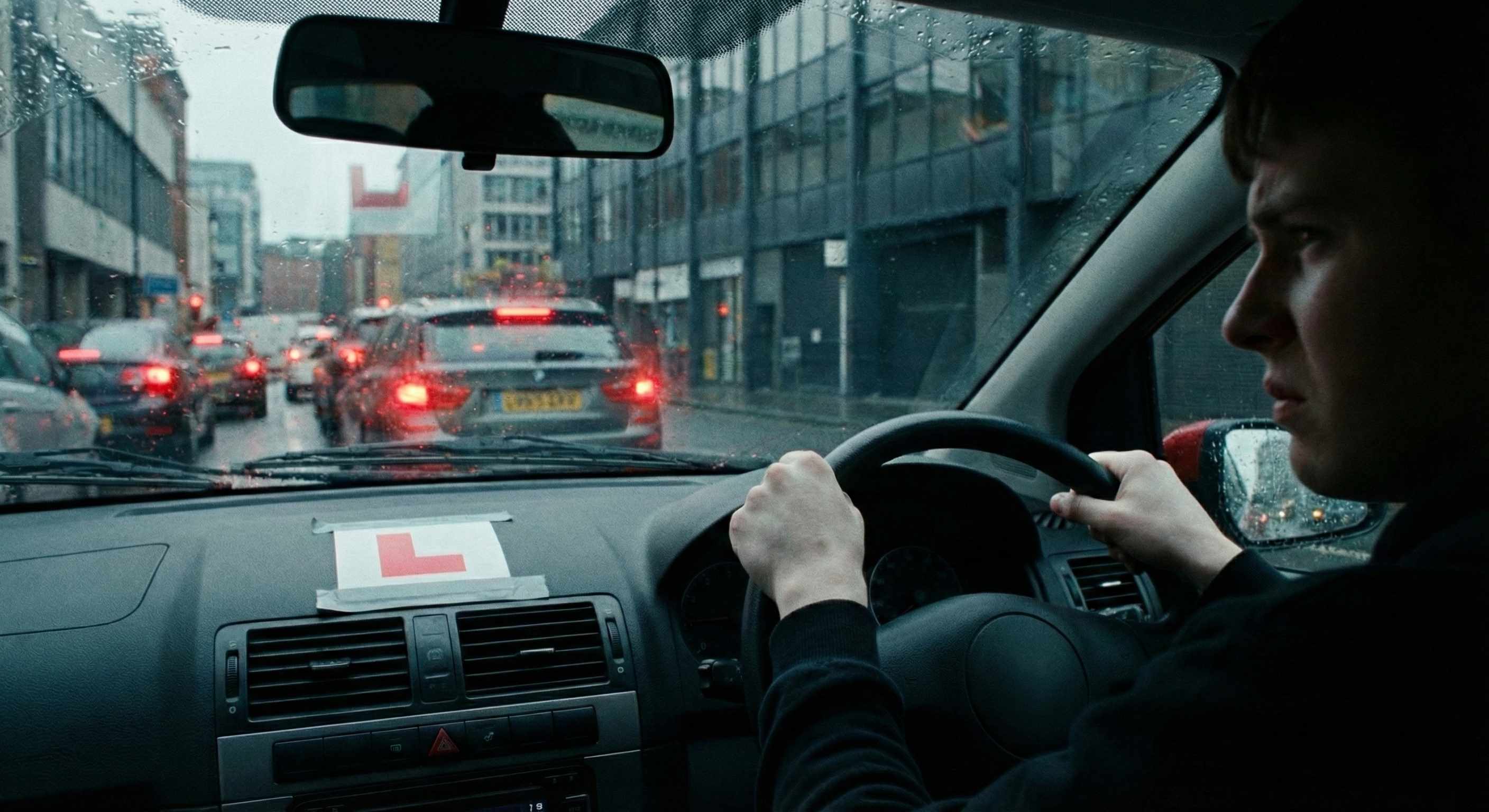
Busy junctions and one-way systems The city centre, Spaghetti Junction approaches, the One Stop area — these places feel genuinely overwhelming the first time you drive through them. But familiarity breeds confidence. By the time you've been through them ten times in lessons, they just feel like another road.
Quiet residential streets Sounds easy, right? These are actually where a lot of learners switch off and pick up careless minor faults — not checking mirrors, creeping over the speed limit, poor positioning around parked cars. The examiner is still watching. Stay switched on.
The Real Reasons People Fail in Birmingham
We've seen a lot of test reports over the years. The same things come up over and over again.
Not checking mirrors enough. This is the big one. Mirrors before you signal, before you change speed, before you pull away. Not occasionally — constantly. Make it a habit in every single lesson until you don't even have to think about it.
Hesitating at junctions. Sitting at a perfectly clear junction because you're not sure whether to go. It reads as a lack of confidence to an examiner, and it's almost always caused by not having enough experience in real, busy traffic. The only cure is getting out there and building that judgement.
Drifting on roundabouts. Pulling out of your lane on exit — especially on spiral roundabouts — is one of the most common serious faults across all Birmingham test centres. Read the lane markings early, hold your position, and don't let the exit pull you wide.
Speed mistakes. Going too slowly on dual carriageways because you're nervous, or missing a speed limit change on a residential road. Both are failable. Keep one eye on the signs at all times.
The independent driving section. Twenty minutes following a sat nav or road signs — and for some learners, this is the bit that unravels them. It doesn't have to be. Make sure your lessons include proper independent driving practice, not just instructor-guided routes.
Honestly — Do a Mock Test
If we could give every Birmingham learner one piece of advice, it would be this. Do a mock test. A proper one — full duration, real routes, examiner-style assessment, honest feedback at the end.
Here's why it works. You might think you know how you drive. But how you drive when your instructor is chatting to you and you feel relaxed is not how you drive when a stranger in a hi-vis is silently scribbling on a clipboard next to you. A mock test shows you the real picture.
Some students finish their mock and feel completely ready. Brilliant — book the test. Others find one or two things that still need work. Even better — because they found out before it counted.
Do the mock on your actual test centre routes. That's the whole point.
The Week Before Your Test
Don't go quiet. Keep having short lessons — even two or three hours across the week keeps everything sharp and your confidence up.
Use that time to revisit whatever your instructor has flagged. A specific roundabout that still feels uncertain. Mirror checks that still need to become more automatic. The independent driving section if it still makes you nervous. This is not the week to practise things you're already good at.
Sort your paperwork. Make sure your provisional licence is valid and you've got your theory test pass certificate ready. Turning up without the right documents means an automatic cancellation — and no, the examiner won't make an exception.
Get some sleep. Seriously. Test day nerves are twice as bad when you're running on five hours.
Test Day — What Actually Helps
Book a warm-up lesson on the morning of your test. Even just an hour. The difference in how our students walk into the test centre after a morning lesson versus those who've just been sitting at home worrying is night and day. It settles your nerves, warms up your reactions, and reminds your brain what driving actually feels like.
Eat something before you go. You'd be surprised how many people skip breakfast on test day and then wonder why they feel shaky halfway through.
Arrive about ten minutes before your test — not earlier. Sitting in that car park for thirty minutes staring at the test centre will not help you.
When the examiner gives you an instruction and you're not sure you heard it right — ask them to repeat it. Completely fine. Far better than guessing and going the wrong way.
And if something goes wrong during the test? Take a breath and carry on. One minor fault is not a fail. But letting that one moment get in your head and affect everything else that follows — that can be. Reset and keep driving.
Automatic or Manual — What Should You Choose?
Both are great options and both are widely available with our Birmingham instructors. Automatic is becoming more and more popular — especially for nervous learners or anyone who finds managing the clutch and gears takes up too much mental energy that should be going on the road.
Just be aware — an automatic licence only covers automatic vehicles. A manual licence covers both. Think about the kind of cars you're likely to drive in your life and talk it through with your instructor if you're not sure. There's no wrong answer.
Finding the Best Instructor in Birmingham
This honestly makes more difference than almost anything else on this list. A good instructor is patient, clear, and straight with you about your progress. A great instructor genuinely wants you to pass — not just to fill their diary.
Look for someone who is DVSA-approved (ADI), knows your local test routes well, and communicates honestly. Read their reviews — not just the star rating, but what people actually say. And if something isn't clicking after a few lessons, don't be afraid to try someone else. It's your money, your time, and ultimately your test.
Ready When You Are
Whether you're a complete beginner who's never sat behind a wheel, a nervous driver who's had a bad experience before, or someone who's already failed their test once and wants to come back stronger — we're here for all of it.
Our instructors know Birmingham's roads, know the test routes, and will be completely straight with you about where you are and what you need to do to pass. No fluff, no false promises.
Give us a call or drop us a message today. First lesson, no pressure.